
Planning a trip to Bali and wondering when the rainy season is in Bali?
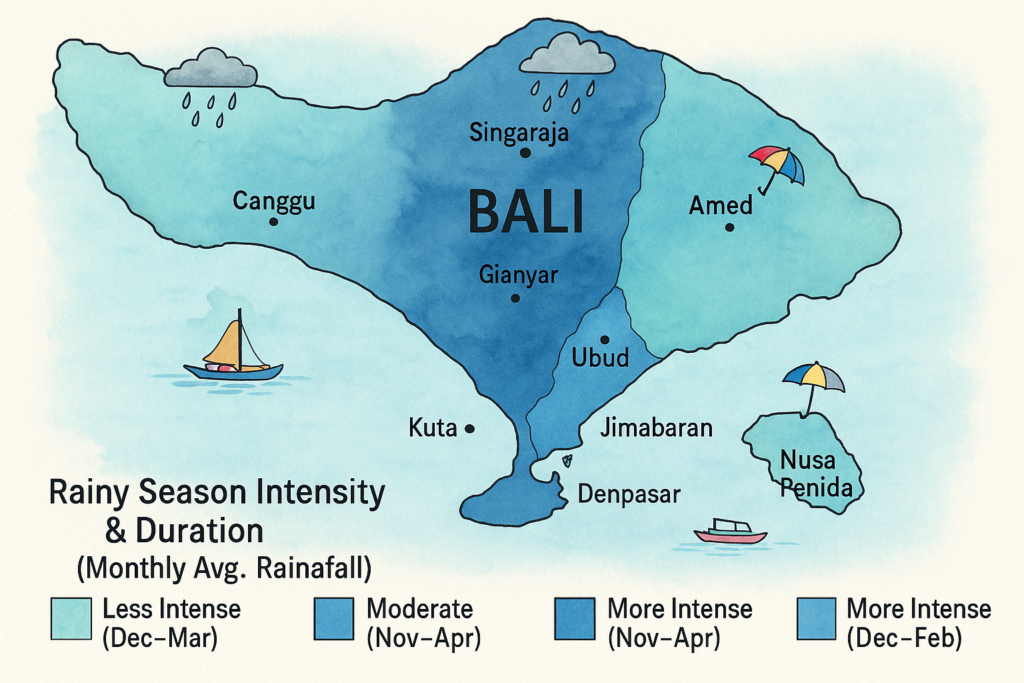
Bali’s rainy season generally runs from November to March, with April often acting as a transition month. But don’t picture six months of constant rain. That’s not really how Bali’s wet season works.
You can still get plenty of sunshine, especially in the mornings. The main difference is that rain becomes less predictable, humidity increases, and heavy tropical showers are more common.
The good news? Bali is incredibly green during this time, waterfalls are at their best, and you can often find better deals on hotels and activities.
So, is Bali worth visiting during the rainy season?
Yes – but it depends on the kind of trip you want.
When Is the Rainy Season in Bali?
The main Bali rainy season months are:
- November – Rain starts increasing
- December – Wetter, with holiday crowds
- January – Usually one of the wettest months
- February – Still very wet and humid
- March – Rain gradually starts decreasing
- April – Transition toward the dry season
The exact timing can change from year to year, and rainfall isn’t the same across the whole island.
If you’re looking for the driest and most predictable weather, the months around May to October are generally a safer choice.
Bali Rainy Season at a Glance
| Month | Rain | What to Expect |
| November | 🌦️ Moderate | Wet season begins |
| December | 🌧️ High | Rain + Christmas crowds |
| January | 🌧️🌧️ Very high | One of the wettest months |
| February | 🌧️🌧️ Very high | Humid and wet |
| March | 🌦️ High | Rain begins easing |
| April | 🌦️ Lower | Transition toward dry season |
Does It Rain All Day in Bali?
This is probably the biggest misconception about the Bali wet season.
It doesn’t usually mean that it rains from morning until night.
A common day might start with sunshine, become cloudy around midday, and then get a heavy shower in the afternoon. The rain may stop after an hour or two and you can be back outside again.
But there are also days when rain lasts much longer, particularly during the wetter months of January and February.
That’s why flexibility is more important than trying to plan every hour of your holiday.
A good rainy-season strategy
Try to schedule:
Outdoor activities → Morning
Indoor activities → Afternoon
For example, visit a waterfall or rice terrace in the morning and keep a spa, cafe, cooking class or museum as your backup if the weather changes.
Bali Rainy Season Month by Month
November
November is when the rainy season starts becoming noticeable.
You can still get plenty of sunny periods, but afternoon showers become more common.
The island also starts turning beautifully green after the drier months.
Good for: Ubud, waterfalls, photography and relaxed holidays.
Rating: ⭐⭐⭐⭐/5
December
December is wetter, but there’s another thing to consider: Christmas and New Year.
Popular areas can become surprisingly busy and accommodation prices can increase around the holidays.
If you’re visiting in December, don’t assume that rainy season automatically means cheap and quiet.
Good for: Food, culture, villas, spas and flexible itineraries.
Rating: ⭐⭐⭐/5
January
January is generally one of the wettest months in Bali.
Heavy showers can be frequent, and outdoor plans can sometimes need to change.
That doesn’t make January a bad time to visit. It simply works better if you aren’t expecting perfect beach weather every day.
The upside is that Bali’s forests, rice fields and waterfalls look spectacular.
Good for: Waterfalls, Ubud, spas, food and photography.
Rating: ⭐⭐⭐/5
February
February is still firmly within the wet season.
Expect warm temperatures, high humidity and frequent rain, although sunny periods can still appear.
If you’re planning a beach-focused holiday, I’d choose a drier month. But if you want to explore Bali at a slower pace, February can still be enjoyable.
Rating: ⭐⭐⭐/5
March
March is one of my favourite rainy-season months because conditions start moving toward the dry season.
Rain is still possible, but the weather can become more manageable.
It’s a good option if you want green landscapes without choosing the wettest part of the year.
Rating: ⭐⭐⭐⭐/5
April
April is a bit of a grey area.
Some people still consider it part of the rainy season, while others consider it the beginning of the dry season.
The reason is that April is really a transition month.
Rainfall generally starts dropping, although showers are still possible.
If you want a balance between greenery and improving weather, April can be a great month to visit.
Rating: ⭐⭐⭐⭐½/5
What Does Bali Feel Like During the Wet Season?
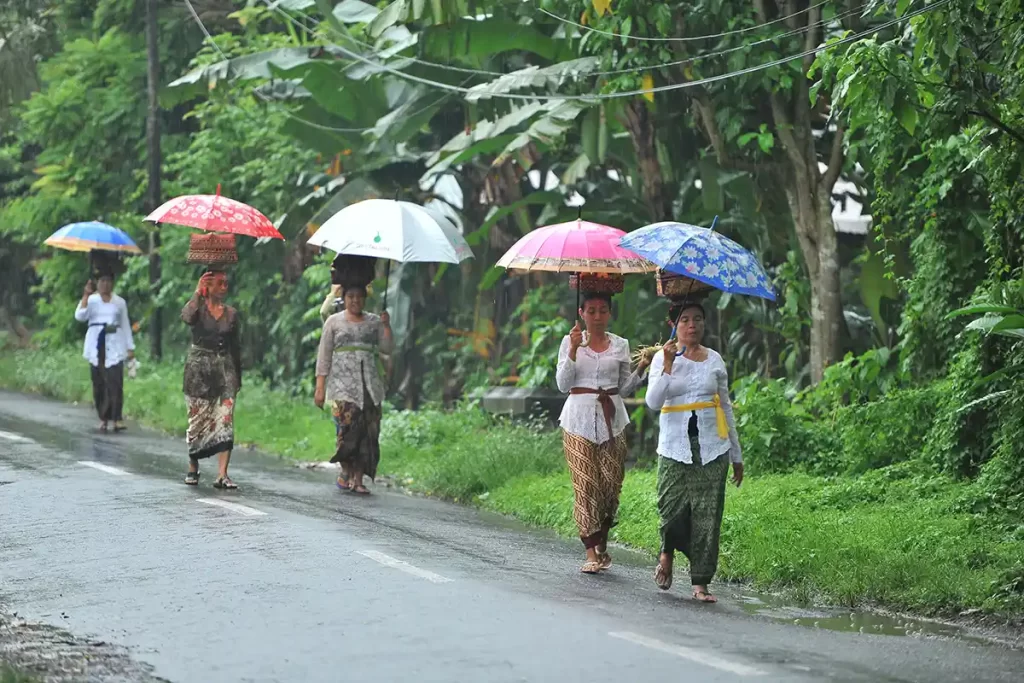
Bali stays warm throughout the rainy season.
The biggest thing you’ll notice isn’t the temperature, it’s the humidity.
After a heavy shower, the air can feel very warm and humid. Roads can become slippery and some areas can temporarily collect water.
But there’s also a huge positive:
Everything becomes incredibly green.
Rice terraces, jungle, hills and gardens look completely different compared with the dry season.
Which Areas of Bali Are Best During Rainy Season?
Ubud
Ubud is one of the best choices during the wet season.
The surrounding jungle and rice terraces become extremely lush, and there are plenty of cafes, restaurants, spas and cultural activities for rainy afternoons.
Canggu
Canggu can still be fun during rainy season if you enjoy cafes, restaurants, shopping and nightlife.
The beach may not always be at its best, but there’s plenty to do away from the sand.
Seminyak
Seminyak is another easy option because you have plenty of restaurants, spas, shops and resorts nearby.
Sanur
Sanur is a good choice if you want a quieter holiday with plenty of hotels, restaurants and indoor options.
Uluwatu
Uluwatu is beautiful during the wet season, but coastal conditions can be unpredictable. If you’re planning boat trips or water activities, check conditions before going.
Best Things to Do in Bali During Rainy Season
Rain doesn’t mean you have to spend your entire holiday inside your hotel.
💦 Visit waterfalls
This is actually one of the best things about visiting Bali during the wet season. Waterfalls can be much more powerful and the surrounding vegetation is incredibly green.
Just be careful after heavy rain because trails and rivers can become dangerous.
🧘 Get a Balinese spa treatment
A rainy afternoon is a pretty good excuse to book a massage.
🍜 Take a cooking class
Learn how to make some Balinese dishes while staying dry.
☕ Explore Bali’s cafes
Ubud, Canggu and Seminyak have plenty of cafes where you can wait out a tropical shower.
🛕 Visit temples
Light rain can actually make some of Bali’s temples and surrounding landscapes feel even more atmospheric.
📸 Go photography hunting
Rain gives Bali a completely different look misty mountains, reflections, dark clouds and bright green landscapes.
Is Bali Beach Weather Good During the Rainy Season?
This depends on what you’re expecting.
If your ideal holiday is:
Wake up → blue sky → beach → sunset → repeat
then the dry season is a better choice.
During the wet season, you can still have beautiful beach days, but you can’t rely on them every day.
Rain can also affect ocean conditions, waves, currents and boat trips.
So if you’re planning to visit places such as Nusa Penida or the Gili Islands, keep your schedule flexible.
What Should You Pack for Bali’s Wet Season?
You don’t need to bring heavy rain gear.
I’d pack:
- Lightweight rain jacket
- Small umbrella
- Quick-drying clothes
- Waterproof phone pouch
- Small dry bag
- Comfortable shoes with good grip
- Sandals
- Mosquito repellent
- Extra socks
- Power bank
A waterproof bag is particularly useful if you’re going out for the whole day.
Bali Rainy Season vs Dry Season
| Rainy Season | Dry Season | |
| Months | Nov–Mar | May–Oct |
| Rain | 🌧️ More | ☀️ Less |
| Humidity | High | Lower |
| Greenery | 🌴 Excellent | Good |
| Waterfalls | 💦 Fuller | Usually lower |
| Beach weather | Less predictable | More reliable |
| Crowds | Often lower | Usually higher |
| Outdoor activities | More weather-dependent | Easier to plan |
Neither season is automatically better.
It depends on what you want from your Bali trip.
So, Is Bali Worth Visiting During the Rainy Season?
Yes.
If you’re happy to work around the weather, Bali can be fantastic during the wet season.
You’ll get:
🌴 Lush green landscapes
💦 Fuller waterfalls
🧘 Great spa and wellness experiences
🍜 Amazing food
📸 Dramatic photography
🌿 Fewer peak-season crowds
💰 Potentially better accommodation deals
But if your number-one priority is guaranteed sunshine and beach days, I’d choose the dry season instead.
My pick
If I had to choose within the rainy season, I’d lean toward November, March or April.
January and February can still be great, but I’d only choose them if you’re comfortable with more unpredictable weather.
The biggest mistake is thinking:
“Rainy season = it rains all day.”
That’s not Bali.
It’s simply a different side of the island greener, wetter, more tropical and sometimes surprisingly beautiful.
Frequently Asked Questions
When is the rainy season in Bali?
Generally from November to March, with April acting as a transition month.
What are the Bali rainy season months?
November, December, January, February and March are the main wet-season months. April is usually considered a transition month.
When is the wettest month in Bali?
January is generally one of the wettest months.
Does Bali rain every day during rainy season?
No. Some days can be mostly sunny, while others can have several hours of rain.
Should I avoid Bali during rainy season?
Not necessarily. If you’re flexible with your plans, rainy season can be a great time to experience Bali.